|
|

|
The Santa Clarita Valley Signal is celebrating 100 years on February 7, 2019. Through recently digitized documents and photographs, along with more than a dozen interviews, SCVTV presents "The Mighty Signal: The First 100 Years."
Executive Producer: Leon Worden Associate Producer: Susan Shapiro Screenplay & Production Supervision: Jessica Boyer Post Production: Makena Adams Engineering: Michael R. Mazzetti Digital Archiving: Eva Gritz Camera: Antonio Curiel Production Assistant: Patricia Silva
Special Thanks:
Santa Clarita Valley history comes alive in this centennial documentary tracing the first 100 years of The Signal, the community newspaper that grew alongside the valley itself. From its founding in 1919 as a small local weekly to its evolution into a daily watchdog covering breaking news, civic life, and neighborhood stories, The Signal has served as the eyes and ears of Santa Clarita for generations. Participants (on- or off-screen): John Boston, Richard Budman, Chris Budman, Maureen Daniels, Austin Dave, Will Fleet, Eric Harnish, Emory Holmes II, Kevin Karzin, Bob Kellar, Daniel Leary, Tony Mason, Marsha McLean, Gail Morgan, Barbara Morris, Tony Newhall, Linda Pedersen, Alan Pollack, Patti Rasmussen, Carol Rock, Philip Scorza, Santa Clarita Valley Historical Society, The Santa Clarita Valley Signal, SCVHistory.com contributors, Fred W. Trueblood III, Dan Watson, Laurene Weste, Tim Whyte. Created to mark the newspaper's 100th anniversary, this film looks back at how a modest hometown paper became a central institution in the Santa Clarita Valley. Through firsthand recollections, archival imagery, and stories from those who lived it, the documentary shows how The Signal reflected — and often shaped — the growth of the community it served. In its earliest years, The Signal chronicled life in a rural valley defined by ranching, oil production, rail travel, and small-town routines. Births, deaths, social gatherings, and trips "to Los Angeles" filled its pages, binding far-flung communities together long before modern media. As Santa Clarita expanded, so did the newspaper's role — covering new housing tracts, schools, businesses, and the changing rhythms of everyday life. The documentary explores how influential owners and editors left lasting marks on the paper's voice and mission. From family ownership in the mid-20th century to the bold, sometimes provocative editorial era under Scott and Ruth Newhall, The Signal embraced the idea that a community newspaper should do more than report events — it should take civic responsibility seriously. Editorial stands, investigative reporting, and fearless commentary made the paper essential reading and, at times, a lightning rod for controversy. The film also recalls moments when The Signal took firm editorial stands on issues that went beyond routine local coverage, including its outspoken opposition to a proposed Ku Klux Klan gathering in Soledad Canyon during the 1960s — an episode that underscored the paper's belief that a community newspaper has a responsibility to confront intolerance and protect the people it serves. Viewers will hear stories about landmark coverage that helped define the paper's reputation: transportation safety battles, environmental fights, local government accountability, school and youth programs, arts and culture, and moments of crisis when the newsroom rose to the occasion. Earthquakes, fires, floods, and other emergencies tested the limits of local journalism — and again and again, The Signal met those moments, often under extraordinary conditions. As technology changed, so did the newspaper. The film documents the transition from hot-type presses and darkrooms to digital publishing, video, and online reporting. Long before "local news online" became commonplace, The Signal experimented with new ways to deliver information while maintaining its commitment to boots-on-the-ground reporting. Even as media landscapes shifted nationwide, the paper remained focused on what larger outlets could not provide: in-depth coverage of Santa Clarita Valley life. At its heart, this documentary is about people — reporters, editors, photographers, cartoonists, production staff, and community members — who believed local journalism matters. It is also about continuity: how a newspaper can change ownership, technology, and format, yet still remain rooted in the place it serves. Ending with voices wishing the paper a happy 100th birthday, the film underscores a simple idea: The Signal does not belong to any one individual or era. It belongs to the community. Its story is inseparable from Santa Clarita's own — past, present, and future.
|
Video: The First 100 Years, 1919/2019
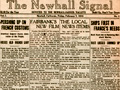
Surviving 1924 Issues
SEE ALSO:
Randy Wicks Cartoon Collection
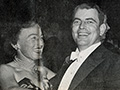
• Scott/Ruth Newhall
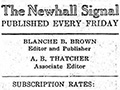
A.B. "Dad" Thatcher Editor 1925/1938
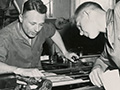
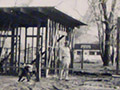
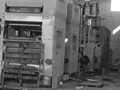
Truebloods' Print Shop 1950s
6th Street Construction 1956
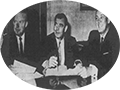
Newhall Buys Signal 1963
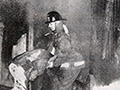
Production Building Burns 1969
1986 Construction x9
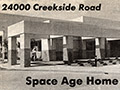
Special Edition: Creekside Opens 9/8/1986
Special Edition in Memory of Scott Newhall 1992
1994 Earthquake
75 Years 1919/1994
Signal Story 1919/1999
Signal Photo Archive Donated to SCVHS 2019
|


The site owner makes no assertions as to ownership of any original copyrights to digitized images. However, these images are intended for Personal or Research use only. Any other kind of use, including but not limited to commercial or scholarly publication in any medium or format, public exhibition, or use online or in a web site, may be subject to additional restrictions including but not limited to the copyrights held by parties other than the site owner. USERS ARE SOLELY RESPONSIBLE for determining the existence of such rights and for obtaining any permissions and/or paying associated fees necessary for the proposed use.
